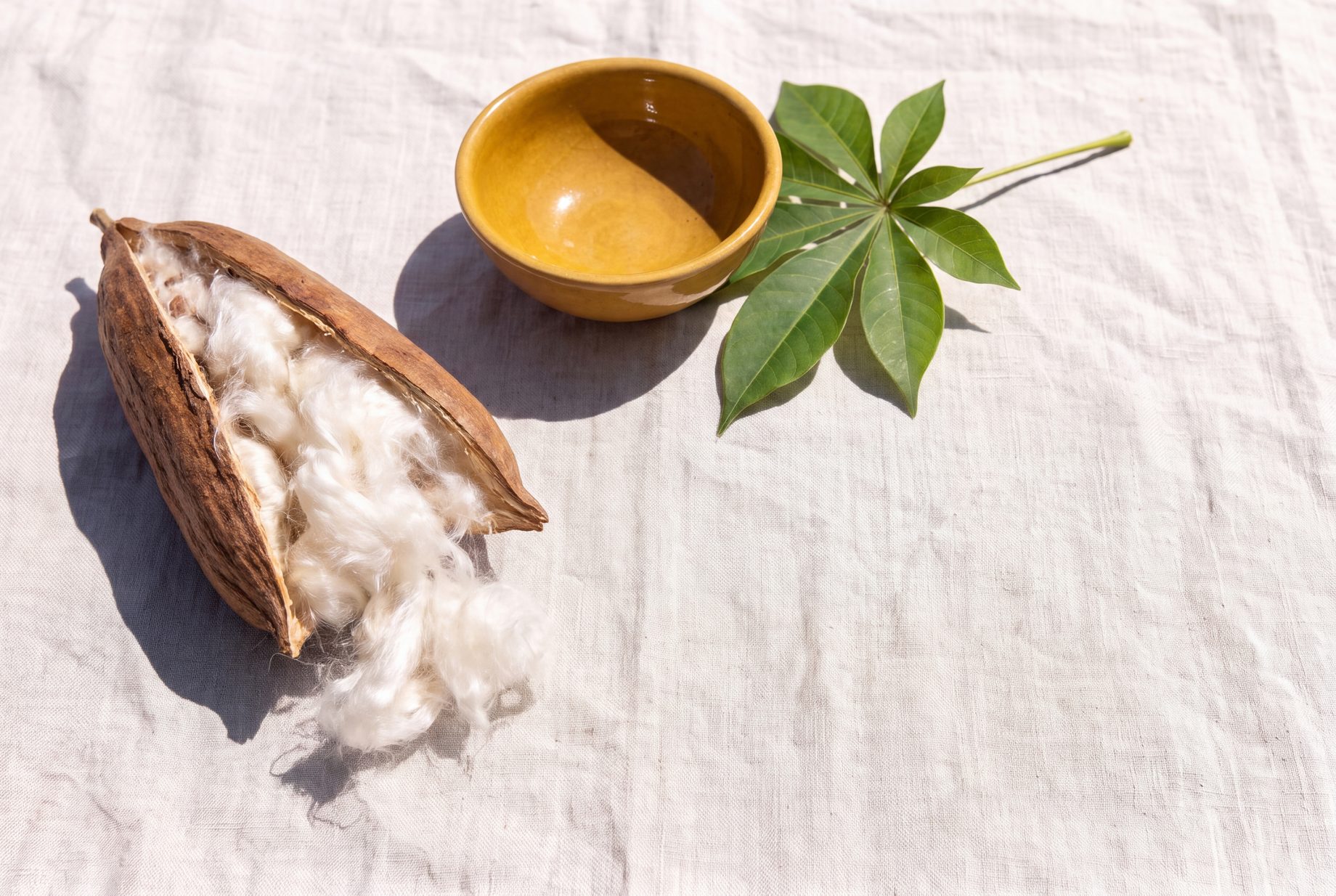
Kapok PillowsThe fibre that is mostly air
Kapok is roughly 80 to 90 per cent air by volume, and that single fact explains the weight, the loft, the clumping and the reason the fibre once filled life jackets.
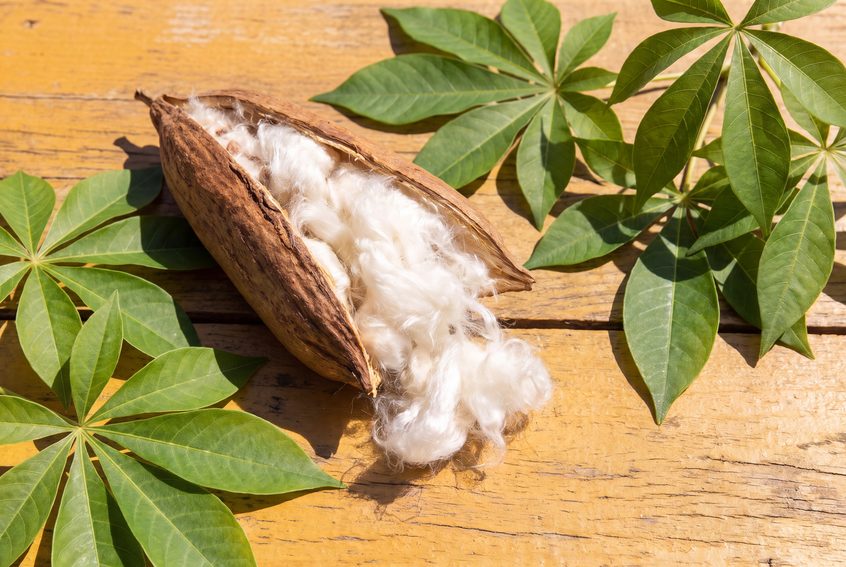
Kapok guides
See every kapok guide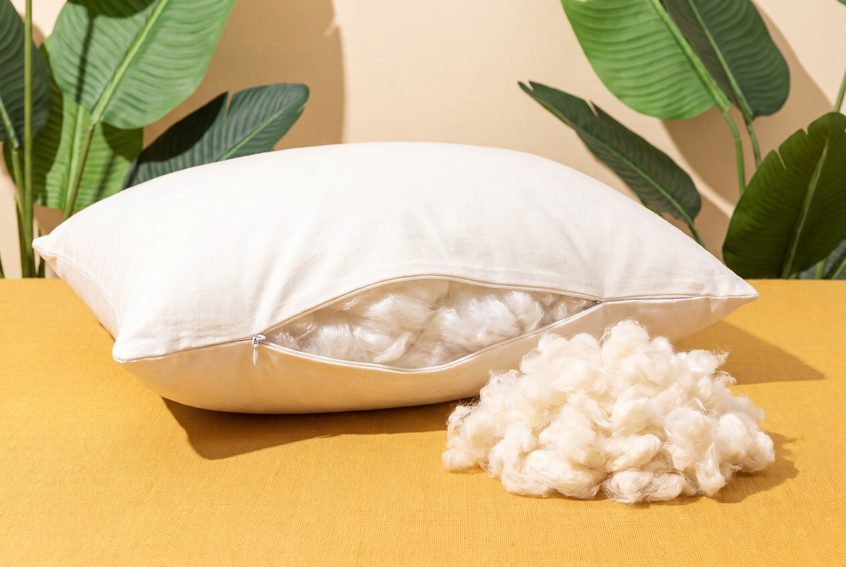
How does kapok behave under a head, night by night?
A kapok pillow changes more in its first month than most pillows change in a year. On the first night the fibre is silky and gives way like down. Within a few weeks it packs into a denser block that holds whatever shape your hands give it. This guide follows that change, using fibre research, posture studies and what sellers print.
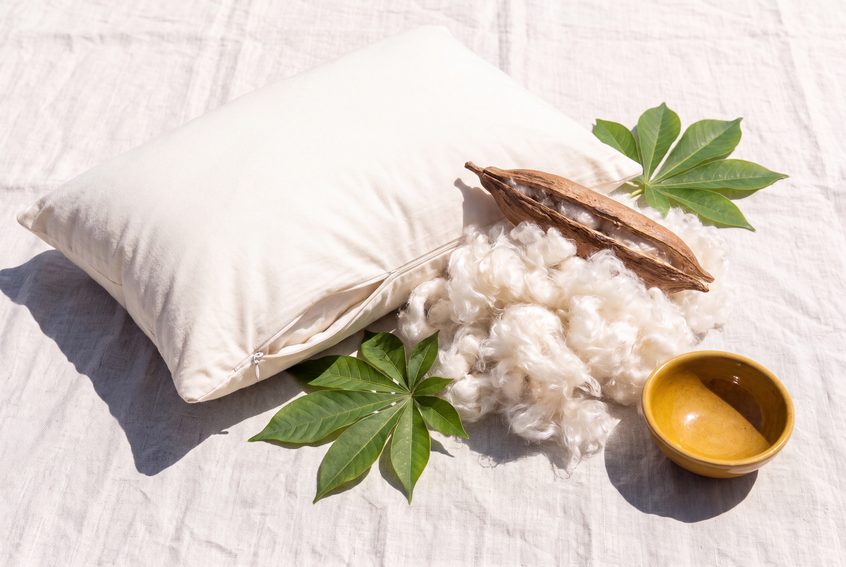
How much kapok does a standard pillow need, and why does the number surprise people?
Kapok is known as one of the lightest natural fibers, so you probably expect a kapok pillow to weigh almost nothing. Then it arrives heavier than the down pillow it replaced. This page sets out the fill weights sellers publish for a standard American bed pillow and explains why kapok needs that much.
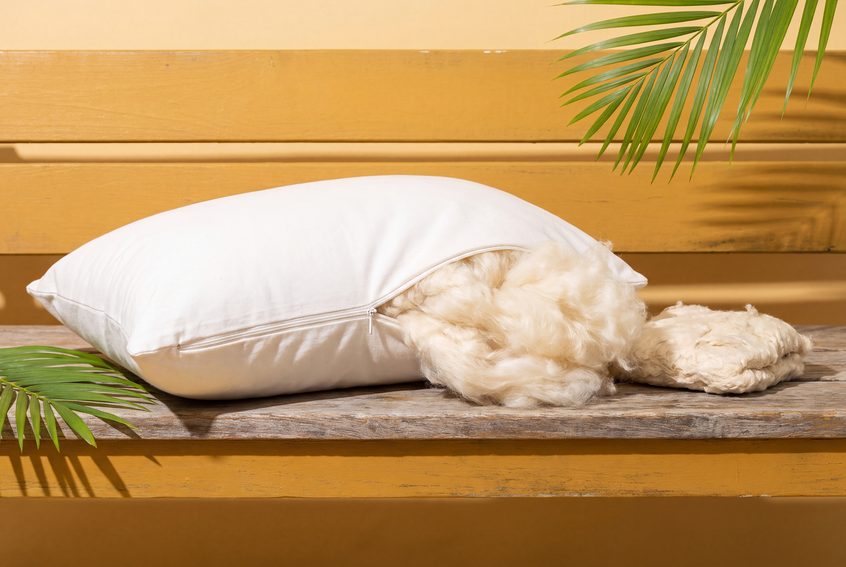
Why does a kapok pillow clump, and how do you fluff it back?
Kapok is a seed fibre that is mostly air, so a kapok pillow is really a bag of tiny sealed tubes. When those tubes flatten, get damp or slide into one corner, you feel lumps. You can fix most of that by hand, once you know which kind of lump you have.
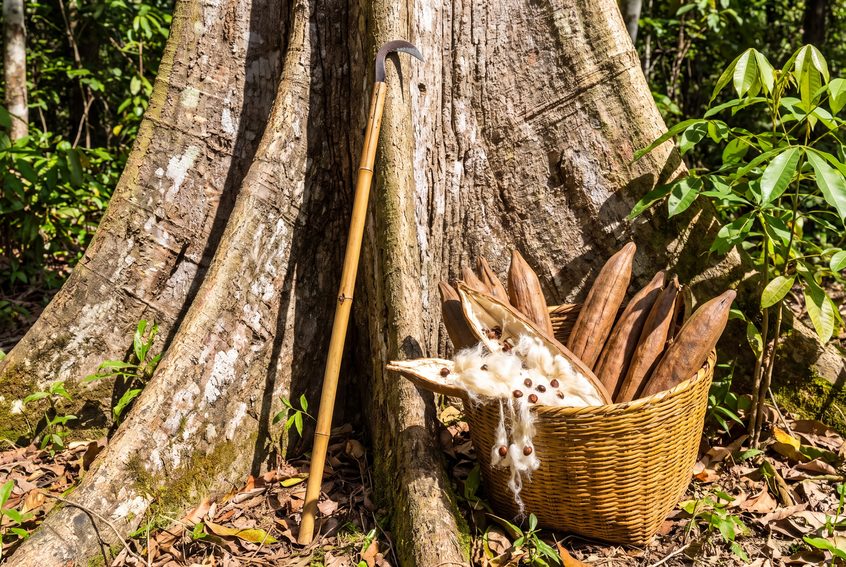
Why can't kapok be machine harvested, and what does that do to the price?
Kapok comes from seed pods on one of the largest trees in the tropics, and a person cut down or picked up every pod that ends up in a kapok pillow. The tree grows very tall even in Southeast Asia, where most of it is grown (Wikipedia, Ceiba pentandra). You might expect all that handwork to make kapok fiber expensive. It doesn't. Knowing why shows you what you are paying for when you buy a pillow: mostly the work done after the harvest, not the fill under your head.
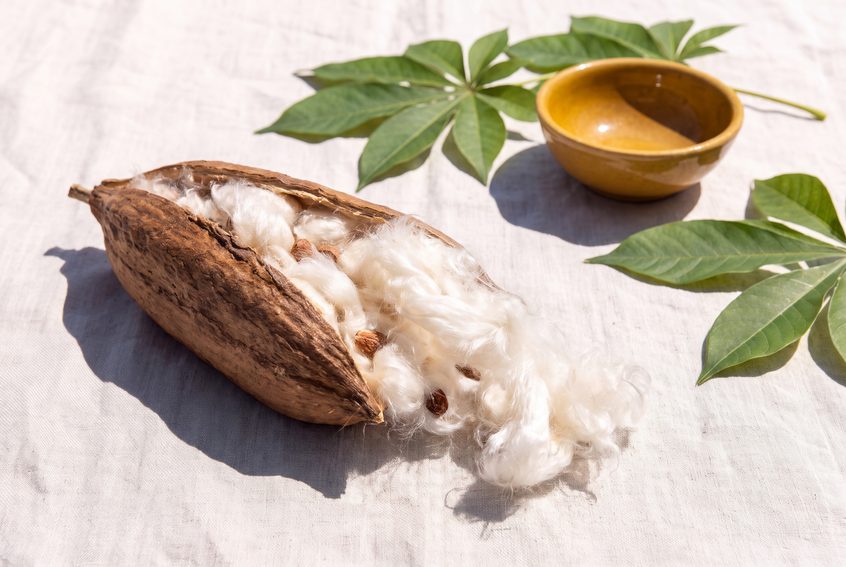
What is kapok, and what is a kapok tree?
Kapok is the silky fiber inside the seed pods of a tall tropical tree, Ceiba pentandra, and it is why a kapok pillow feels soft and weighs so little. It is the fill in the natural kapok pillows sold across the United States. Under a microscope each strand is a hollow tube, and kapok fibers form hollow microtubes that contain as much as 80% air (PMC). For you, that air means a light, plush pillow that gives under your head. It also flattens until you fluff it.
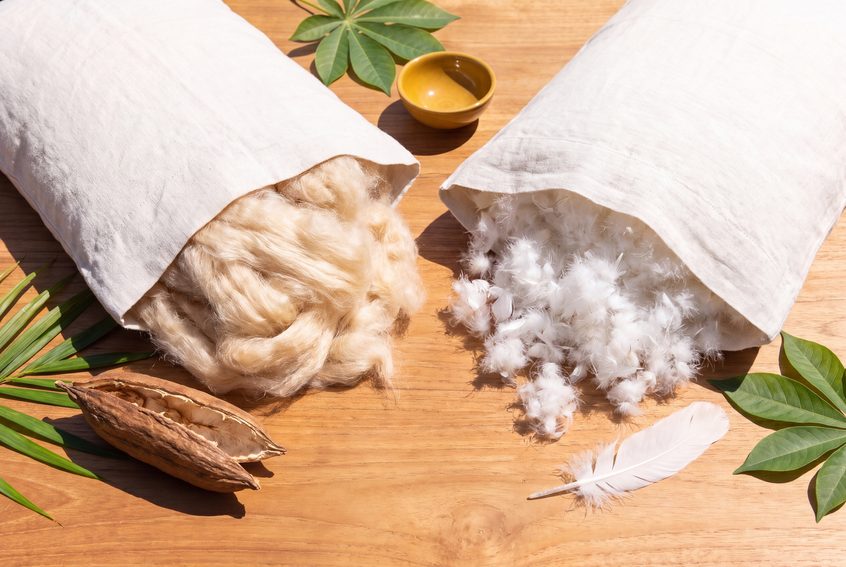
How does a kapok pillow differ from a down pillow, fiber by fiber?
Kapok and down both make a soft pillow, but they get there in different ways. Kapok is a hollow plant fiber from the seed pods of the kapok tree, while down is the fluffy under-layer of ducks and geese. Those origins decide how much fill your pillow needs, how it springs back under your head, how it copes with water, and what it means if you have allergies.
Does kapok fit
Is kapok the right fill for you, and how much of it?
About Kapok Pillows
Where does kapok come from?
From the seed pods of Ceiba pentandra, a tropical tree that drops them once a year and cannot be mechanically harvested.
The pods are collected by hand, opened by hand, and the fibre separated from the seed by hand. That is not romanticism about craft, it is the reason the price moves the way it does.
Why is the fibre hollow?
Each strand is a tube with a waxy wall and an air-filled lumen, which is why it floats and why it will not spin.
The same structure that makes kapok useless as a yarn makes it excellent as a fill. It is light because it is mostly nothing.
What does this site cover?
The botany, the harvest, the handling, and what it is actually like to sleep on kapok for a year.
Ceiba pentandra, its range, and the annual cycle that sets supply.
What causes it and the two-minute handling that undoes it.
The four ways the two behave differently under a head.
What water does to a waxy hollow fibre, which is not what people expect.
What the life-jacket history tells you about the fibre.
The two countries that dominate it, and why the price is volatile.